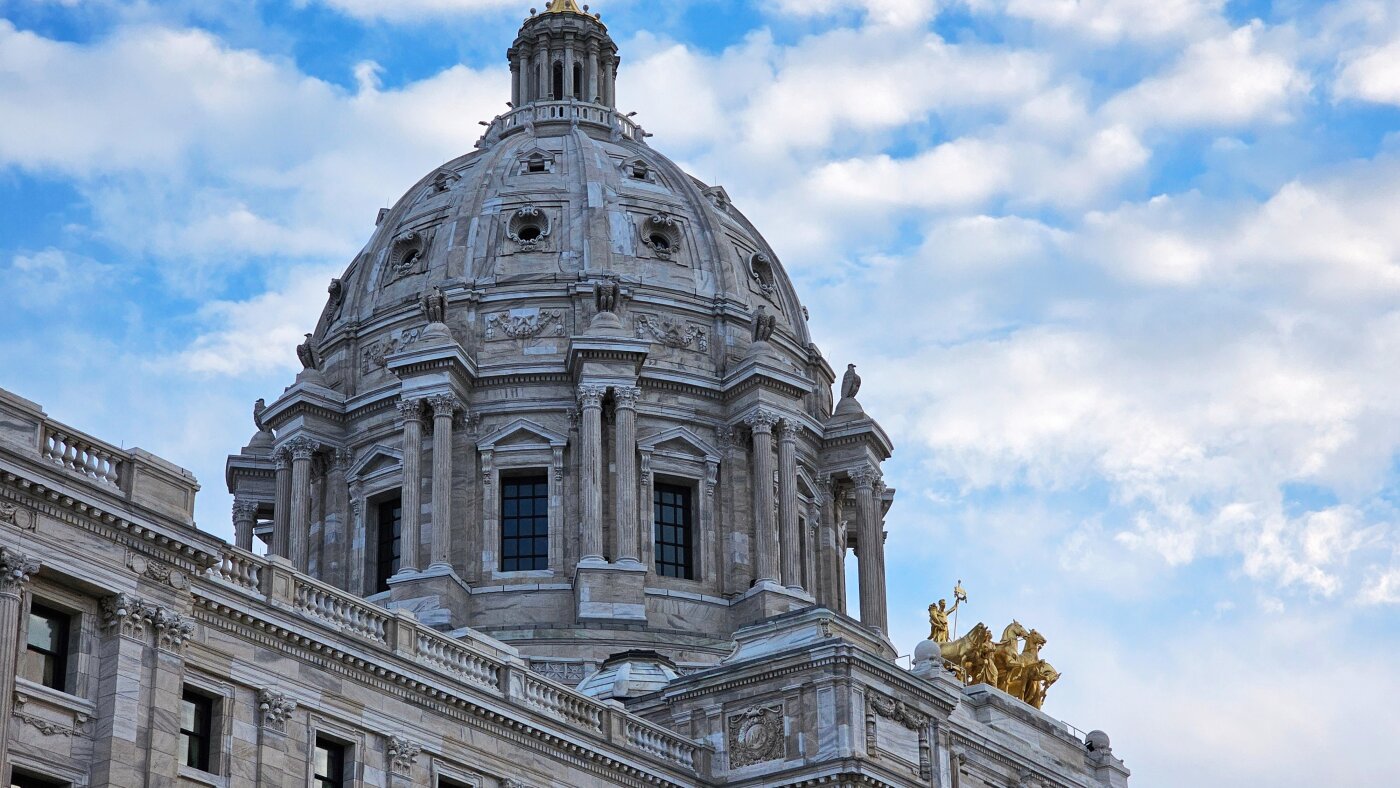
market outlook We deliver market intelligence combining stock research, financial news, and earnings summaries to support data-driven investment decisions. Minnesota has become the first U.S. state to pass a law that explicitly bans prediction markets, making it a felony for platforms like Kalshi and Polymarket to operate within its borders. The move represents a significant escalation in state-level scrutiny of the controversial industry, where dozens of other states have previously taken legal action.
Live News
market outlook Investors these days increasingly rely on real-time updates to understand market dynamics. By monitoring global indices and commodity prices simultaneously, they can capture short-term movements more effectively. Combining this with historical trends allows for a more balanced perspective on potential risks and opportunities. According to a report from NPR, Minnesota's new legislation criminalizes the operation of prediction market platforms, classifying violations as a felony. While numerous states have previously pursued legal measures against the industry—ranging from cease-and-desist orders to civil penalties—Minnesota is the first to enact a statutory ban with felony-level consequences. Prediction markets allow users to bet on the outcomes of future events, such as elections, sporting events, or economic indicators. Platforms like Kalshi and Polymarket have grown in popularity but have also attracted regulatory scrutiny over concerns about gambling, market manipulation, and election integrity. Critics argue that these platforms resemble unregulated gambling operations, while proponents claim they provide valuable forecasting data. The Minnesota law specifically targets companies that operate prediction market platforms within the state. The legislation does not differentiate between event-based contracts or other types of prediction products. The move may set a precedent for other states considering similar crackdowns. However, the full scope of enforcement and potential legal challenges remain unclear. Industry observers note that the federal regulatory landscape for prediction markets is still evolving. The Commodity Futures Trading Commission (CFTC) has previously scrutinized such platforms but has not issued a comprehensive ban. Minnesota’s decision could influence future federal and state policy discussions.
Minnesota Enacts Landmark Ban on Prediction Markets, Making Operation a FelonyPredictive analytics are increasingly part of traders’ toolkits. By forecasting potential movements, investors can plan entry and exit strategies more systematically.Some traders combine sentiment analysis from social media with traditional metrics. While unconventional, this approach can highlight emerging trends before they appear in official data.Sentiment analysis has emerged as a complementary tool for traders, offering insight into how market participants collectively react to news and events. This information can be particularly valuable when combined with price and volume data for a more nuanced perspective.Some investors integrate AI models to support analysis. The human element remains essential for interpreting outputs contextually.Predictive tools are increasingly used for timing trades. While they cannot guarantee outcomes, they provide structured guidance.Data-driven insights are most useful when paired with experience. Skilled investors interpret numbers in context, rather than following them blindly.
Key Highlights
market outlook The interplay between short-term volatility and long-term trends requires careful evaluation. While day-to-day fluctuations may trigger emotional responses, seasoned professionals focus on underlying trends, aligning tactical trades with strategic portfolio objectives. - First-of-its-kind felony ban: Minnesota is the only state to date to classify operation of prediction markets as a felony, signaling a more aggressive regulatory stance. - Precedent for other states: Dozens of states have taken legal action against prediction markets, but Minnesota’s law may encourage other jurisdictions to adopt similar felony-level restrictions. - Impact on major platforms: Companies like Kalshi and Polymarket may face restricted access to Minnesota customers and possible legal exposure if they continue operations within the state. - Sector uncertainty: The ban introduces additional regulatory risk for the prediction market industry, which has already faced uncertainty at both state and federal levels. - Potential constitutional challenges: Legal experts suggest that the law could be challenged on First Amendment or interstate commerce grounds, though such challenges would likely take months or years to resolve. - Market implications for related sectors: Companies providing technology, payment processing, or data services to prediction market platforms could face indirect regulatory pressure if other states follow Minnesota’s lead.
Minnesota Enacts Landmark Ban on Prediction Markets, Making Operation a FelonyTracking related asset classes can reveal hidden relationships that impact overall performance. For example, movements in commodity prices may signal upcoming shifts in energy or industrial stocks. Monitoring these interdependencies can improve the accuracy of forecasts and support more informed decision-making.Macro trends, such as shifts in interest rates, inflation, and fiscal policy, have profound effects on asset allocation. Professionals emphasize continuous monitoring of these variables to anticipate sector rotations and adjust strategies proactively rather than reactively.Cross-asset analysis can guide hedging strategies. Understanding inter-market relationships mitigates risk exposure.The interplay between macroeconomic factors and market trends is a critical consideration. Changes in interest rates, inflation expectations, and fiscal policy can influence investor sentiment and create ripple effects across sectors. Staying informed about broader economic conditions supports more strategic planning.Economic policy announcements often catalyze market reactions. Interest rate decisions, fiscal policy updates, and trade negotiations influence investor behavior, requiring real-time attention and responsive adjustments in strategy.Some traders combine sentiment analysis with quantitative models. While unconventional, this approach can uncover market nuances that raw data misses.
Expert Insights
market outlook Some investors use trend-following techniques alongside live updates. This approach balances systematic strategies with real-time responsiveness. From a professional perspective, Minnesota’s move represents a notable shift in the regulatory environment for prediction markets. While federal oversight has been limited, state-level bans may create a patchwork of regulations that complicates compliance for platforms operating nationally. Investors in companies associated with prediction markets—such as technology providers or financial intermediaries—may face heightened uncertainty regarding future revenue and legal costs. The law could also have broader implications for the broader financial technology and online gambling sectors. As states increasingly target these platforms, the cost of compliance and potential litigation may rise. However, it is too early to assess whether other states will follow Minnesota’s felony-level approach or opt for less severe regulatory measures. For now, market participants should monitor legal developments in Minnesota and potential responses from federal regulators. The outcome of any legal challenges could shape the future of prediction markets in the United States. As always, investors are advised to exercise caution and conduct independent research before making decisions related to emerging regulatory environments. Disclaimer: This analysis is for informational purposes only and does not constitute investment advice.
Minnesota Enacts Landmark Ban on Prediction Markets, Making Operation a FelonyPredictive analytics combined with historical benchmarks increases forecasting accuracy. Experts integrate current market behavior with long-term patterns to develop actionable strategies while accounting for evolving market structures.Experts often combine real-time analytics with historical benchmarks. Comparing current price behavior to historical norms, adjusted for economic context, allows for a more nuanced interpretation of market conditions and enhances decision-making accuracy.Access to multiple timeframes improves understanding of market dynamics. Observing intraday trends alongside weekly or monthly patterns helps contextualize movements.Investors these days increasingly rely on real-time updates to understand market dynamics. By monitoring global indices and commodity prices simultaneously, they can capture short-term movements more effectively. Combining this with historical trends allows for a more balanced perspective on potential risks and opportunities.Real-time news monitoring complements numerical analysis. Sudden regulatory announcements, earnings surprises, or geopolitical developments can trigger rapid market movements. Staying informed allows for timely interventions and adjustment of portfolio positions.Real-time monitoring of multiple asset classes can help traders manage risk more effectively. By understanding how commodities, currencies, and equities interact, investors can create hedging strategies or adjust their positions quickly.